
Pounamu Sky: Riding the Aotearoa Winds
In the crowded landscape of modern open-world titles, few games have dared to embrace the sheer, unadulterated joy of flight quite like Pounamu Sky. Stripping away the combat and complex crafting systems that often clutter the genre, this aerial exploration adventure focuses on a singular, beautifully realised mechanic: gliding. Armed with nothing but a high-tech wing-suit and a profound understanding of aerodynamics, players are cast into a sprawling archipelago inspired by the rugged, verdant landscapes of New Zealand. It is a game that demands patience and observation, rewarding those who take the time to read the wind and surrender to the rhythm of the skies. Pounamu Sky is a breathtaking exercise in restraint, delivering an experience that is as meditative as it is thrilling.
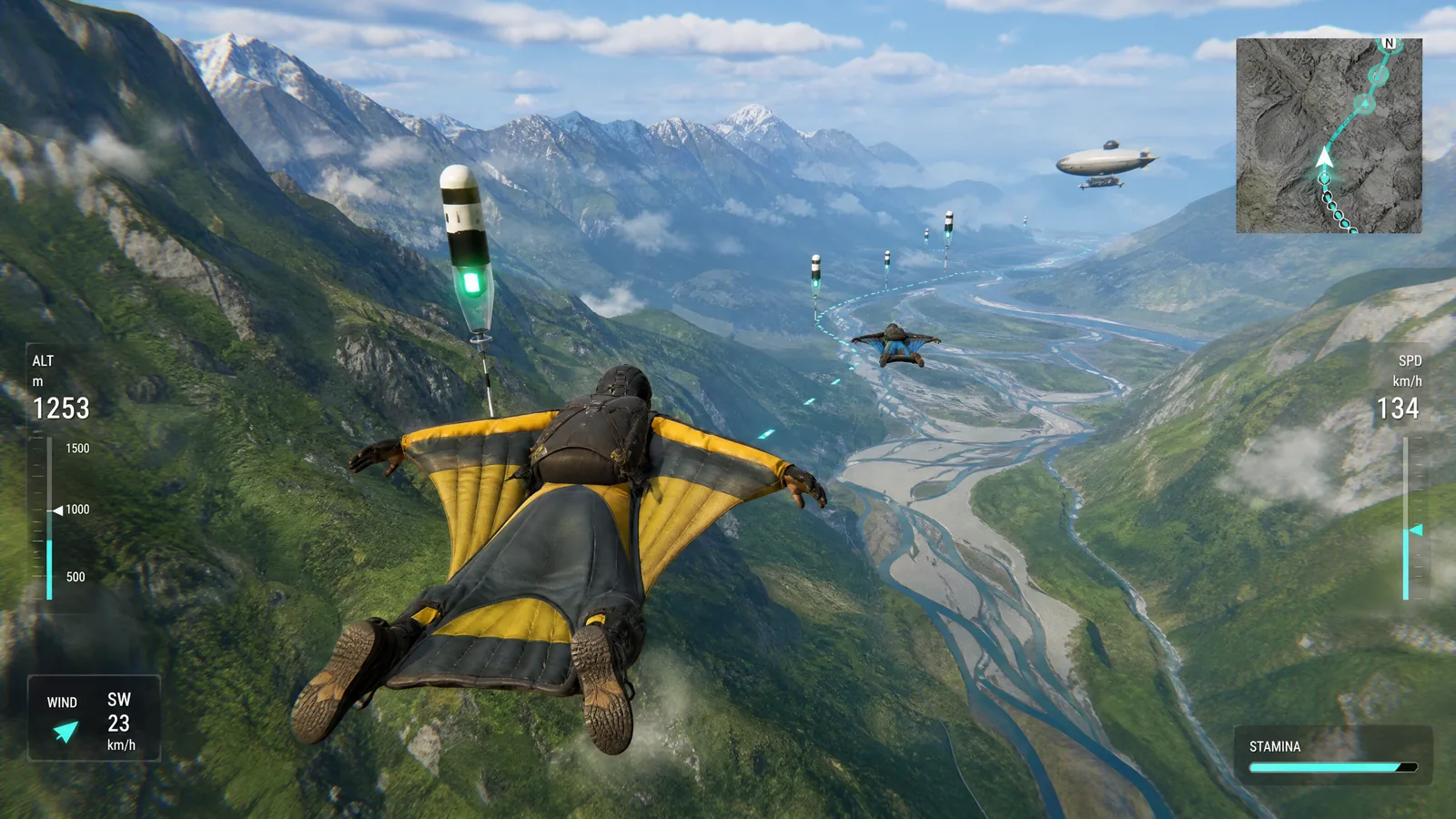
The core loop of Pounamu Sky revolves around the mastery of flight controls and the intricate systems that govern the game's atmosphere. Unlike traditional flight simulators or arcade-style flying games, the mechanics here are deeply rooted in physics and environmental awareness. Players must learn to read the wind, visualised through subtle shifts in cloud formations, the rustling of the dense forest canopy below, and the gentle whistling of the breeze. Recognising thermal updrafts and katabatic winds is essential for maintaining altitude and conserving stamina. The flight controls themselves are remarkably tactile, requiring precise inputs to adjust pitch and yaw. A slight miscalculation can lead to a rapid loss of momentum, sending your glider plummeting towards the green ranges below. However, when the systems click, the sensation of soaring effortlessly above the world is unparalleled.
Mastering the Currents and Route Discovery
Stamina management is a crucial component of the aerial traversal in Pounamu Sky. Your glider is not powered by an engine, but by your own physical endurance and the kinetic energy you harvest from the environment. Every aggressive manoeuvre, steep climb, or sudden dive drains your stamina reserve. To survive the longest flights, players must chart efficient routes, stringing together thermal columns and ridge lifts to stay airborne. This introduces a deeply satisfying puzzle element to the navigation. Route discovery becomes an organic process of trial and error, encouraging players to survey the landscape and plan their trajectories carefully. The game provides minimal waypoints, trusting the player's intuition and observational skills to guide them through the treacherous mountain passes and sprawling valleys.
Scattered across these majestic environments are a series of survey beacons, which serve as both navigational aids and the primary source of structured challenges. Reaching these beacons often requires navigating through complex aerodynamic hazards, such as sudden crosswinds or turbulent storm fronts. Activating a beacon not only maps the surrounding topography but also unlocks new cosmetic customisation options for your wing-suit and provides valuable meteorological data for future flights. These beacon challenges are meticulously designed, pushing the limits of your gliding proficiency without ever feeling artificially punishing. The sense of accomplishment derived from finally conquering a particularly elusive peak and lighting its beacon is immensely gratifying.
It is a rare triumph when a game manages to turn the simple act of travelling from one point to another into its most compelling feature, transforming the wind itself into both an adversary and a vital ally.
The rewards for exploration in Pounamu Sky are intrinsic rather than extrinsic. While you will uncover hidden groves, ancient ruins, and breathtaking vistas, the game does not shower you with arbitrary loot or experience points. Instead, the reward is the discovery itself, and the gradual mastery of the environment. The world is densely packed with environmental storytelling, hinting at a forgotten civilisation that once thrived among the peaks. This narrative restraint is one of the game's greatest strengths. Rather than bogging the player down with exposition-heavy cutscenes or endless dialogue trees, Pounamu Sky allows its world to speak for itself. The lore is delivered in hushed tones, through the ruins you glide past and the ancient murals etched into the cliff faces.
Performance and Presentation
From a visual standpoint, Pounamu Sky is nothing short of spectacular. The game captures the distinctive beauty of the New Zealand wilderness with astonishing fidelity. The lush, fern-covered valleys, the jagged, snow-capped peaks, and the crystalline rivers cutting through the landscape are rendered with a painterly touch. The dynamic weather system not only affects gameplay but also dramatically alters the mood of the environment. Gliding through a sun-drenched valley feels entirely different from battling your way through a torrential downpour or navigating a thick, enveloping fog. The sound design is equally impressive, with the rush of the wind and the distant calls of native birdlife providing an immersive auditory backdrop.
However, the ambitious scope of the world and the complex physics calculations do come with some performance implications. On PC, the game is highly scalable, but console players may notice occasional frame rate dips when traversing the most densely forested areas or during particularly intense weather events. While these performance hiccups are rarely severe enough to ruin a flight, they are noticeable in a game that relies so heavily on smooth, fluid motion. Additionally, the game's hands-off approach to tutorials may alienate players who prefer a more guided experience. The initial learning curve is steep, and the mechanics of wind reading and stamina management can be frustrating to grasp in the opening hours.
Final Verdict
Despite these minor limitations, Pounamu Sky is a remarkable achievement in the realm of aerial exploration. It is a game that strips away the extraneous noise of modern gaming to focus on a singular, beautifully executed vision. The mechanics of flight are deep and rewarding, the world is a joy to explore, and the narrative restraint allows the environment to take centre stage. It is an experience tailored for players who appreciate atmospheric, slow-burn adventures and those who find satisfaction in mastering complex, physics-based systems. For anyone who has ever looked up at the sky and dreamt of riding the currents, Pounamu Sky offers an unforgettable journey into the clouds.
With its stunning vistas, challenging navigation, and profound sense of freedom, it stands as a testament to the power of focused game design. The wind is calling, the survey beacons are waiting, and the green ranges of this digital Aotearoa offer a sanctuary for those willing to take the leap. Pounamu Sky earns a well-deserved 8.6/10, cementing its place as a standout title for fans of exploration and atmospheric gameplay.